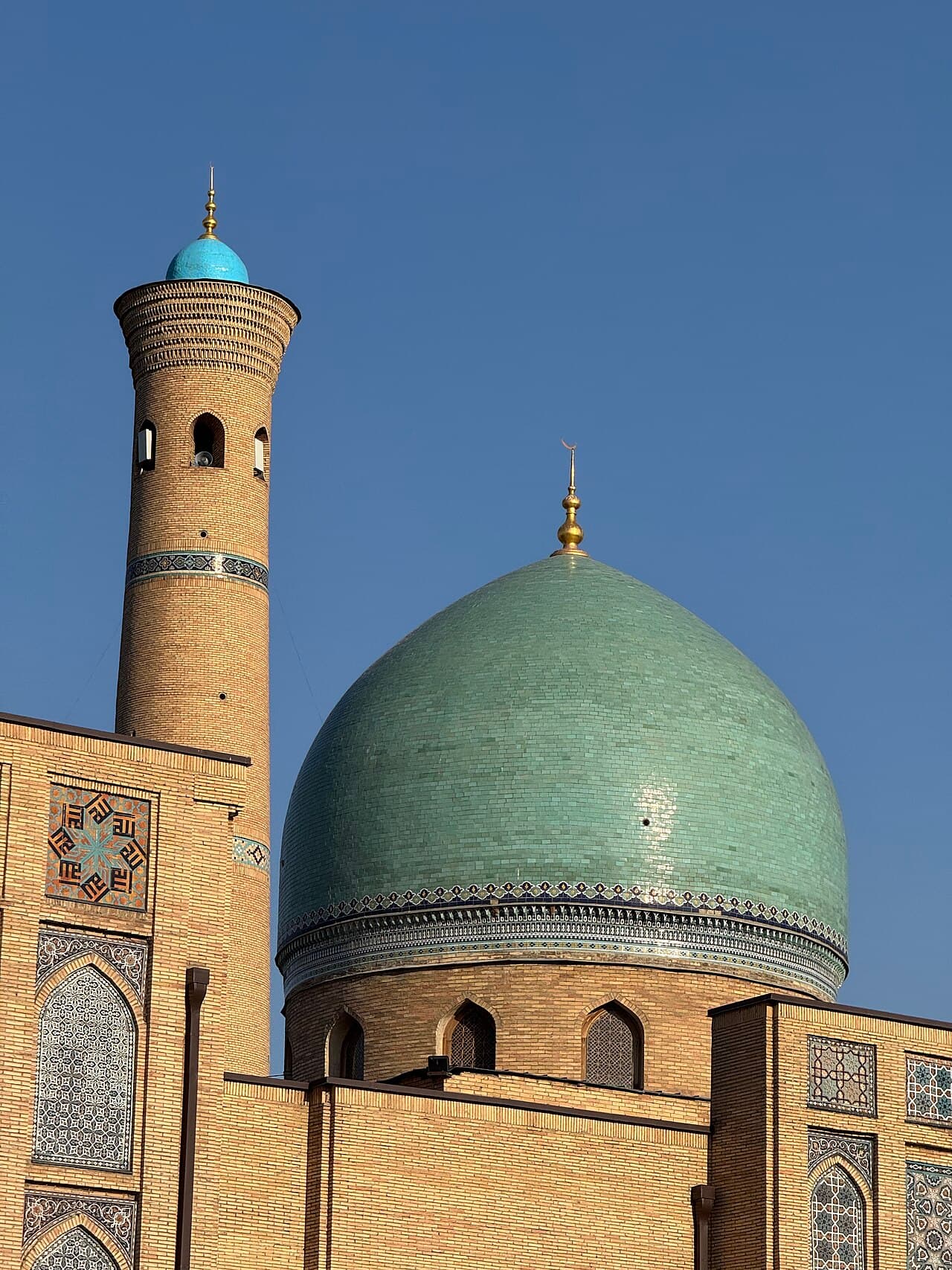
Thirteen days with the layers of Central Asia — Afrasiyab, desert fortresses of Khorezm, Termez digs and museum vaults with experts. The route crosses the country and also crosses periods and disciplines, from Bronze Age settlement mounds inside modern Tashkent to Buddhist monasteries on the Amu Darya and Zoroastrian citadels in the Kyzylkum.
You will walk the excavated quarters of Kanka and Ming Urik, the Buddhist temple at Kuva, the Kushan fortress of Kampyrtepa, the pre-Mongol city of Afrasiab beneath Samarkand, Paykent outside Bukhara, and the clay walls of Ayaz-Kala and Toprak-Kala. Museum collections at Termez and Afrasiab put the finds in context.
A fully escorted experience inside Uzbekistan with hand-picked hotels, an English-speaking guide and all internal transport included. We meet you in Uzbekistan — flights from major European cities can be arranged on request.
Tour highlights
Afrasiab settlement and museum, Samarkand
Kampyrtepa and Dalverzintepa in Bactria
Buddhist sites of Karatepa and Fayaztepa
Toprak-Kala and Ayaz-Kala in ancient Khorezm
Paykent, the Asian Pompeii
Ichan-Kala, Khiva
13 days
Day-by-day itinerary
Day 1Arrival in Tashkent
You are met on arrival and transferred to your hotel, then begin your guided sightseeing. You climb the hill of Aktepa in the Yunusabad district, the worn remains of a fifth-century fortress that guarded Tashkent from the north, for a panorama over the city. You continue to Ming Urik, an ancient settlement almost in the centre of the modern capital, where archaeologists uncovered a fire temple. You then drive to Kanka in the Akhangaran valley, seventy kilometres away, the oldest and largest settlement of the Tashkent oasis, still under excavation.
Day 2Tashkent – Fergana – Kuva – Fergana
After breakfast you drive to the Fergana Valley, about 320 kilometres. The mountain road linking the valley to the rest of the country climbs over the Kamchik Pass at 2,267 metres, with stops for the views. You arrive at Kuva, a small town north-east of Fergana city, where excavations uncovered an entire residential quarter and, most importantly, a Buddhist temple with terracotta sculpture. Your guide walks you through the layout of the site and what it says about religion in the valley before Islam. Overnight in Fergana.
Day 3Fergana – Margilan – Rishtan – Tashkent
You drive to Margilan and visit the Said Akhmad-Khoja Madrasah, now occupied by weavers and carpet makers, then the Yodgorlik silk factory to follow ikat cloth from cocoon to loom. If it is a Thursday or a Sunday you also see Kumtepa Bazaar, the largest market in the valley. You continue to Rishtan and the workshop of the ceramicist Rustam Usmanov, whose blue-glazed work is exhibited abroad, for a pottery demonstration and his small museum collection. You then return to Tashkent over the pass.
Day 4Tashkent – Termez – Kampyrtepa – Dalverzintepa – Khalchayan
An early transfer takes you to the domestic terminal for the flight south to Termez, about two hours. Your guide and driver meet you and take you straight to Kampyrtepa on the Amu Darya, a Hellenistic and Kushan fortress dating from the end of the fourth century BC and one of the oldest excavated sites in the country. You pass the Jarkurgan minaret and the crossing known as Alexander the Great's bridge, then visit Dalverzintepa, whose sculpture shows the development of Buddhist art in northern Bactria, and the ruins of Khalchayan.
Day 5Termez
A full day in one of the oldest cities in Central Asia and a major Buddhist centre before the Arab conquest. You visit the Kokildor-Ota khanaka, the Kirk Kiz fortress, a summer residence of the Samanid rulers, and the Sultan Saodat ensemble of tombs. You walk out to the Zurmala tower, the eroded core of a Buddhist stupa, and to the monastery sites of Karatepa and Fayaztepa above the river. You then see the Mausoleum of Al-Hakim at-Termezi and the Termez Archaeological Museum, whose collection holds much of what has been lifted from these sites.
Day 6Termez – Samarkand
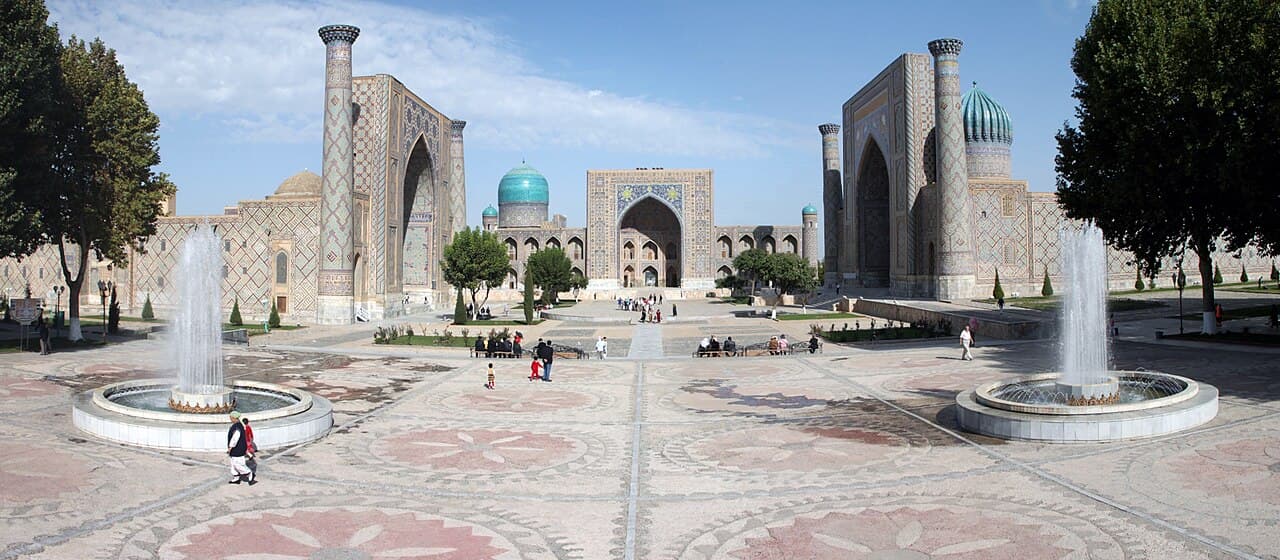
In the morning you leave Termez and drive north to Samarkand, roughly 380 kilometres and six to seven hours through the mountains, with stops along the way. The road climbs out of the Surkhandarya lowlands and crosses the ridges near Boysun and Shakhrisabz before dropping into the Zarafshan valley. You arrive in Samarkand in the afternoon and check in to your hotel. The rest of the day is free to rest or to make a first walk to Registan Square in the evening. Overnight in Samarkand.
Day 7Samarkand – Nurata Mountains
You meet your guide for a morning in Samarkand, beginning at Registan Square and the Ulugbek Observatory, where the buried arc of the fifteenth-century sextant survives. You continue to Afrasiab, the vast mound of the pre-Mongol city, and to the museum on the site, which holds the seventh-century ambassadors' fresco and finds from the excavations. In the afternoon you drive to Sentob or a neighbouring village in the Nurata Mountains, some 330 kilometres, and settle into a family guesthouse. Overnight in the village.
Day 8Nurata Mountains – Bukhara
People have farmed these valleys since the time of Alexander the Great, and much is still done as it was. You spend the morning in the village watching bread baked in a clay oven, yarn spun and cows milked, and can take a guided walk up to a waterfall past rock carvings, ride a donkey along the terraces, or drop in at the village school. Lunch is with a local family. In the afternoon you drive on to Bukhara, arriving in the evening and checking in to your hotel in the old town.
Day 9Bukhara – Paykent – Bukhara
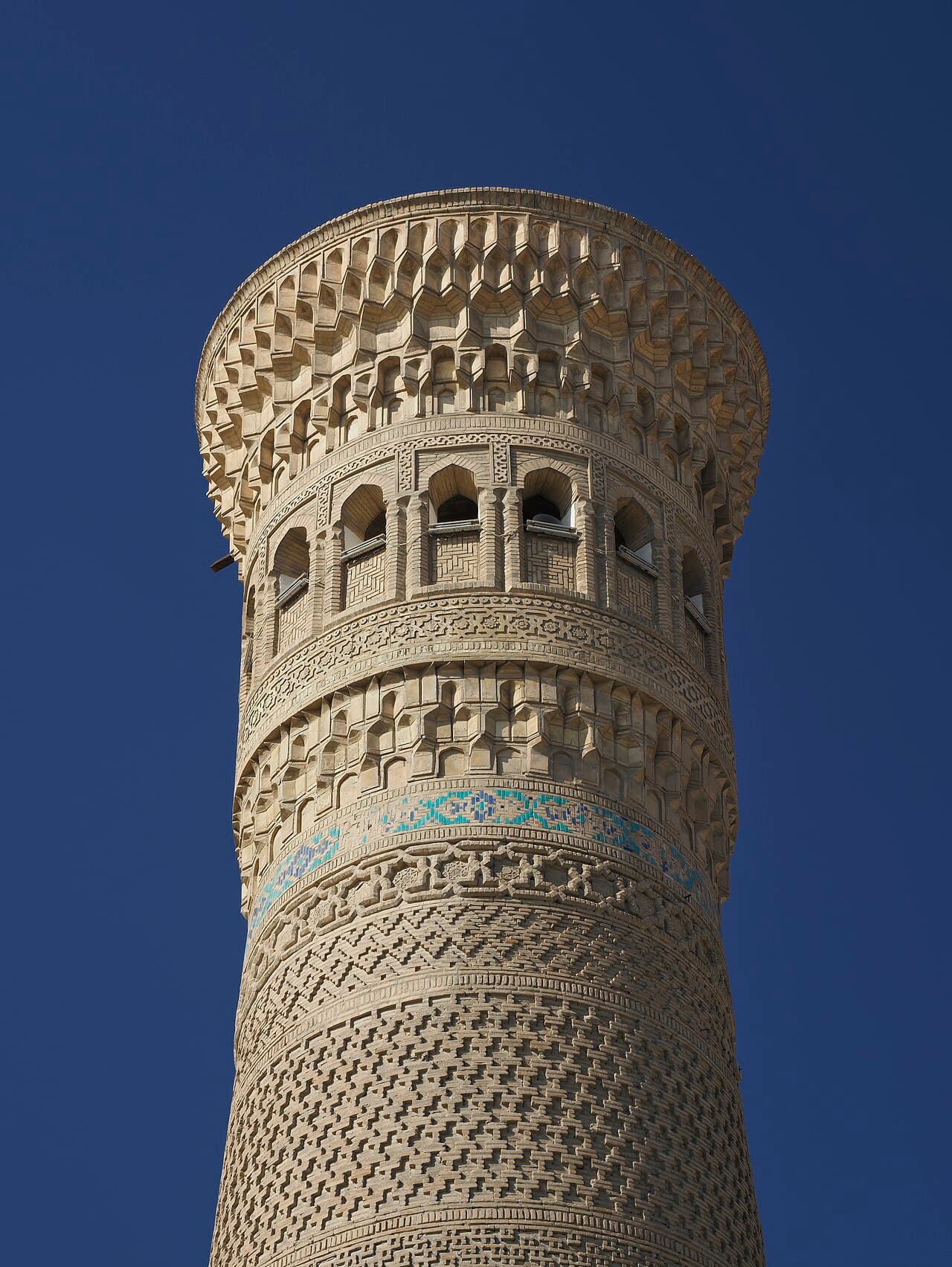
In the morning you drive sixty kilometres to Paykent, the caravan city sometimes called the Asian Pompeii, and visit the site museum opened in 2003 beside the ruined fortress walls, with its pottery, coins, jewellery and imported porcelain spanning fifteen centuries. You return to Bukhara for a walking tour of the old city: the Lyabi-Hauz ensemble, the Magoki-Attori Mosque built over a pre-Islamic temple, Chor-Minor, the trading domes, the Kalyan minaret and mosque, the Ark Fortress, Bolo-Khauz and the Samanid and Chashma-Ayub mausoleums.
Day 10Bukhara – Ayaz-Kala yurt camp
You leave Bukhara in the morning for the long drive north-west to the Ayaz-Kala yurt camp, some 480 kilometres and seven to eight hours. The modern road follows the historic Silk Road route across the Kyzylkum Desert, and you stop for views of the sand and of the Amu Darya where the highway crosses it. Lunch boxes are prepared for the journey. You arrive at the camp in the late afternoon and are shown to your yurt. Dinner is served in the camp and the evening is spent under a very dark sky.
Day 11Ayaz-Kala – Kyzyl-Kala – Toprak-Kala – Khiva
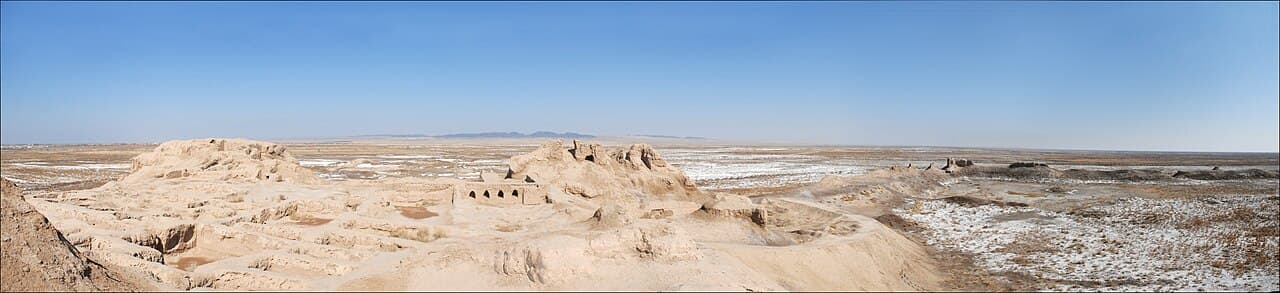
You begin with Ayaz-Kala itself, one of the largest fortresses of ancient Khorezm, held by Kushan frontier troops nearly nineteen centuries ago and never a town in its own right. You then transfer across the desert to Kyzyl-Kala, a compact fort of the Kushan-Afrigid period, and to Toprak-Kala, capital of Khorezm in the third century AD and the only fully excavated monument in the region, whose scale and plan still surprise archaeologists. In the afternoon you drive on to Khiva, about 150 kilometres, and check in to your hotel.
Day 12Khiva – Urgench – Tashkent
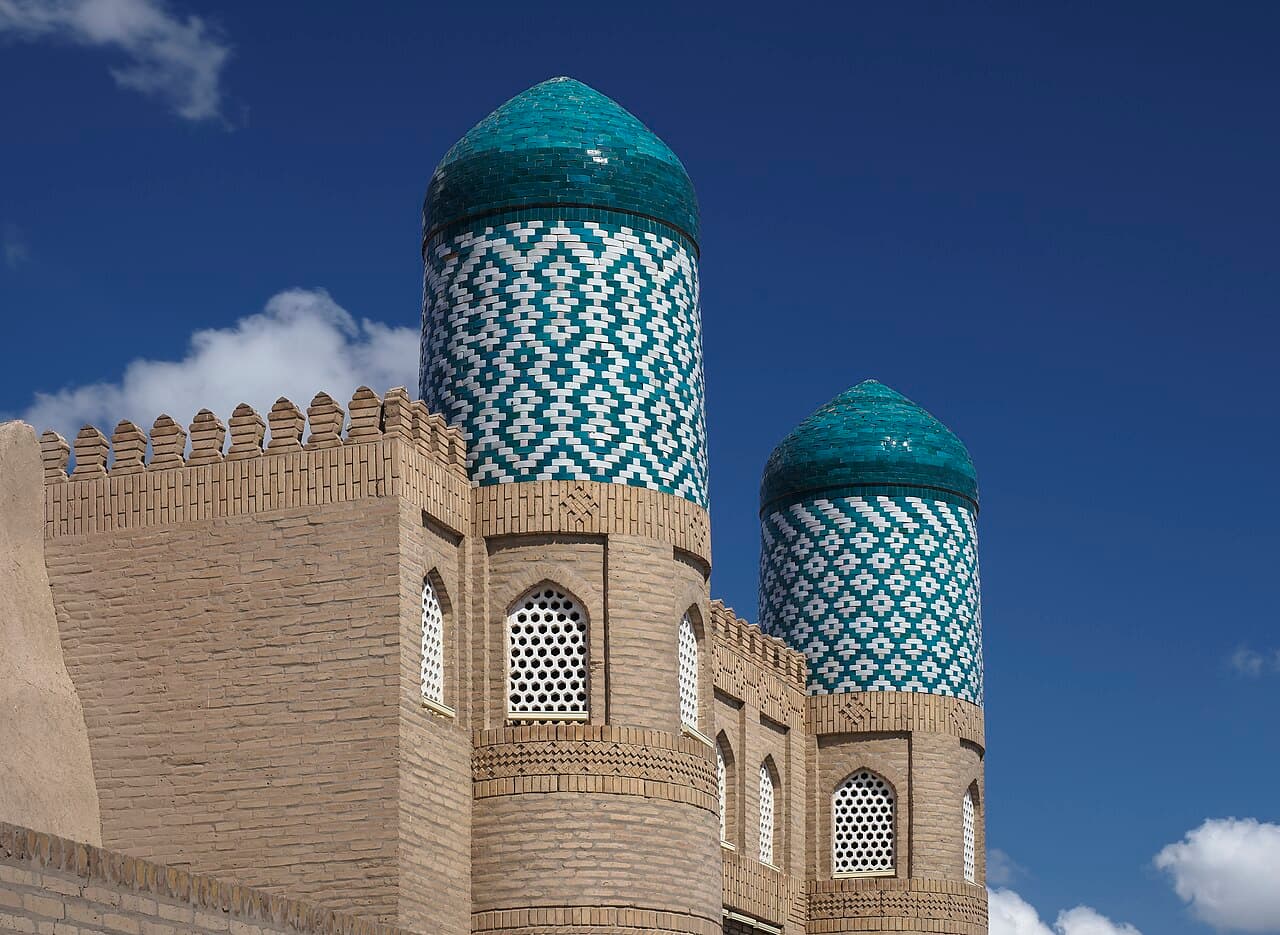
You check out by noon and spend the day inside Ichan-Kala, the walled inner town and a UNESCO World Heritage site. You visit the Mukhammad Amin Khan and Mukhammad Rahimkhan madrasahs, the stumpy tiled Kalta-Minor, the Juma Mosque with its 213 carved wooden columns, Tash-Khovli Palace, the Pakhlavan Makhmud mausoleum and the Islom Khodja minaret, the tallest in the country. The afternoon is free. In the evening you transfer to Urgench airport, thirty kilometres away, for the flight back to Tashkent.
Day 13Tashkent – departure
You check out of your hotel by noon. If your flight allows, there is time to visit the Islamic Civilisation Centre or the State Museum of History of Uzbekistan, whose collection covers much of the ground you have walked over the past fortnight, from Bactrian sculpture to Khorezmian wall painting. You are then transferred to Tashkent International Airport for your departure. This is the end of the thirteen-day Uzbekistan Archaeological Tour.
Package details
Only inclusions explicitly present in the tour data are listed here.
Confirmed in the tour description
English-speaking local guide throughout
All internal transport and transfers
Hand-picked hotels with daily breakfast
Rest and wellness stay at the listed resort
Accommodation
The catalogue records the accommodation standard shown below. Exact hotel names and room categories are confirmed with your booking.
Group size
Up to 26
travellers
Included in this tour
Wellness & restorative stays
Time to slow down is built into this itinerary. The stays below are linked to this tour and form part of the travel programme.
Included in this tour
Chartak Mineral Springs Resort
Namangan, Fergana Valley
Famous for its mineral waters and treatments for gastrointestinal and musculoskeletal conditions. Modern facilities in a serene mountain valley setting.

 Included in this tour