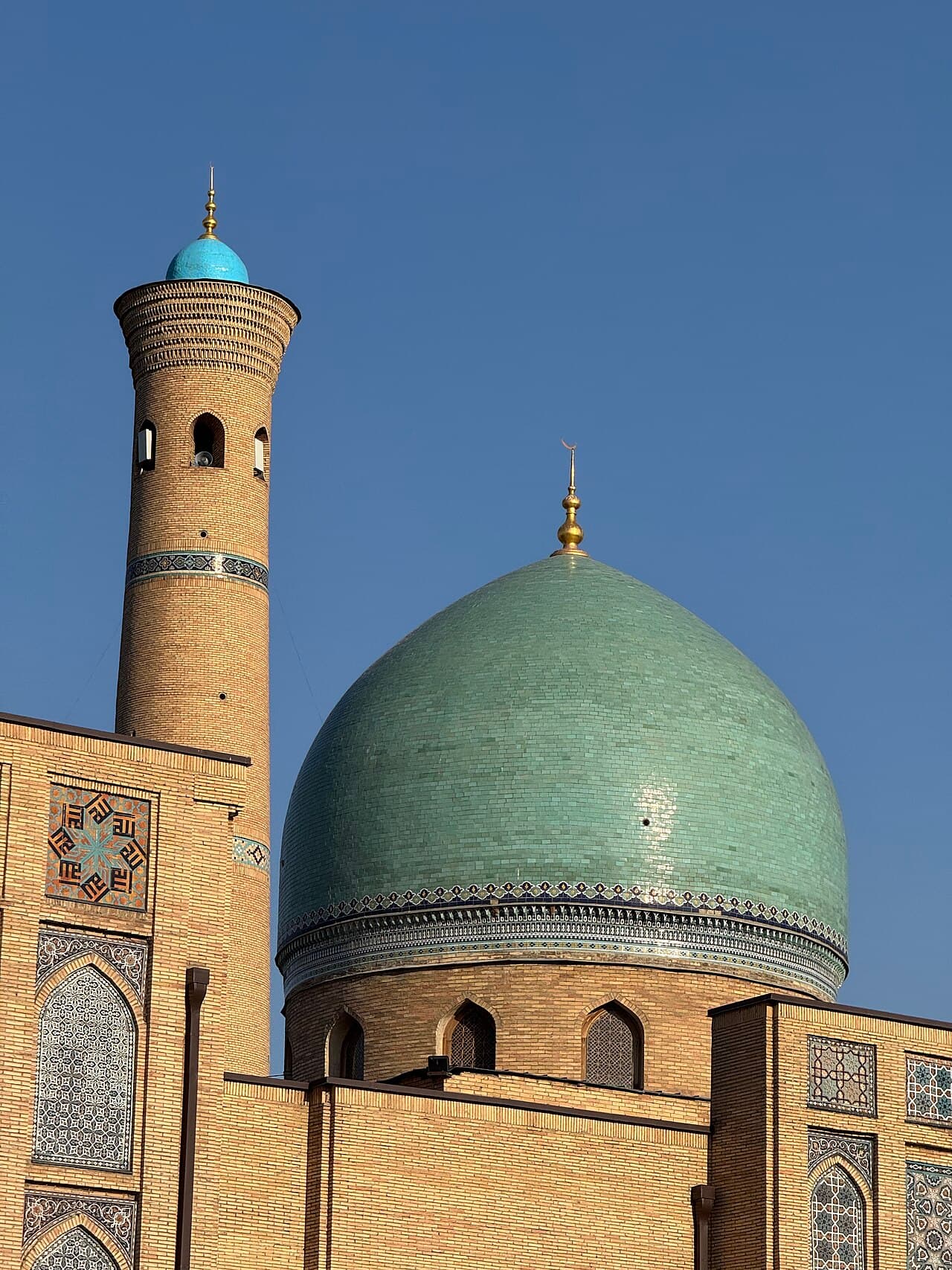
Surkhandarya is the deep south of Uzbekistan, a province of cotton fields, Bactrian ruins and mountain villages tucked under the Hissar range. Its heartland is Boysun, whose songs, embroidery and spring rituals were among the first traditions anywhere recognised by UNESCO as a masterpiece of intangible heritage.
7 daysTashkent · Termez · Boysun · Shakhrisabz · Samarkand
1 / 12
Overview
Surkhandarya is the deep south of Uzbekistan, a province of cotton fields, Bactrian ruins and mountain villages tucked under the Hissar range. Its heartland is Boysun, whose songs, embroidery and spring rituals were among the first traditions anywhere recognised by UNESCO as a masterpiece of intangible heritage. Very few visitors come this way, which is precisely the point.
You begin in Tashkent, fly south to Termez on the Amu Darya, and spend two days among the Buddhist stupas and monasteries that made Termez a centre of the Kushan world, before climbing into the Hissar foothills to Boysun itself. The return leg crosses the mountains to Shakhrisabz and Samarkand, closing with Timurid grandeur after a week of quiet villages.
Seven days, hand-picked hotels and guesthouses, daily breakfast, an English-speaking guide throughout and all internal transport and the Termez flight included.
Tour highlights
UNESCO-listed Boysun cultural space
Fayaz-Tepa Buddhist monastery
Zurmala stupa, Termez
Kirk-Kiz fortress of the Samanids
Hissar foothill villages and crafts
Ak-Saray Palace, Shakhrisabz
7 days
Day-by-day itinerary
Day 1Arrival in Tashkent
You are met at Tashkent International Airport and driven to your hotel. Once you have settled in, your guide takes you into the Old City for the Khast-Imam complex and the Mausoleum of Kaffal Shashi, then on to Chorsu Bazaar under its great green dome, where the spice and dried-fruit rows are the best introduction to Uzbek food you will get. You ride a stop or two on the tiled Tashkent metro into the modern centre, finishing at Amir Timur Square and the Courage Monument, which marks the earthquake of 1966. Overnight in Tashkent.
Day 2Tashkent – Termez
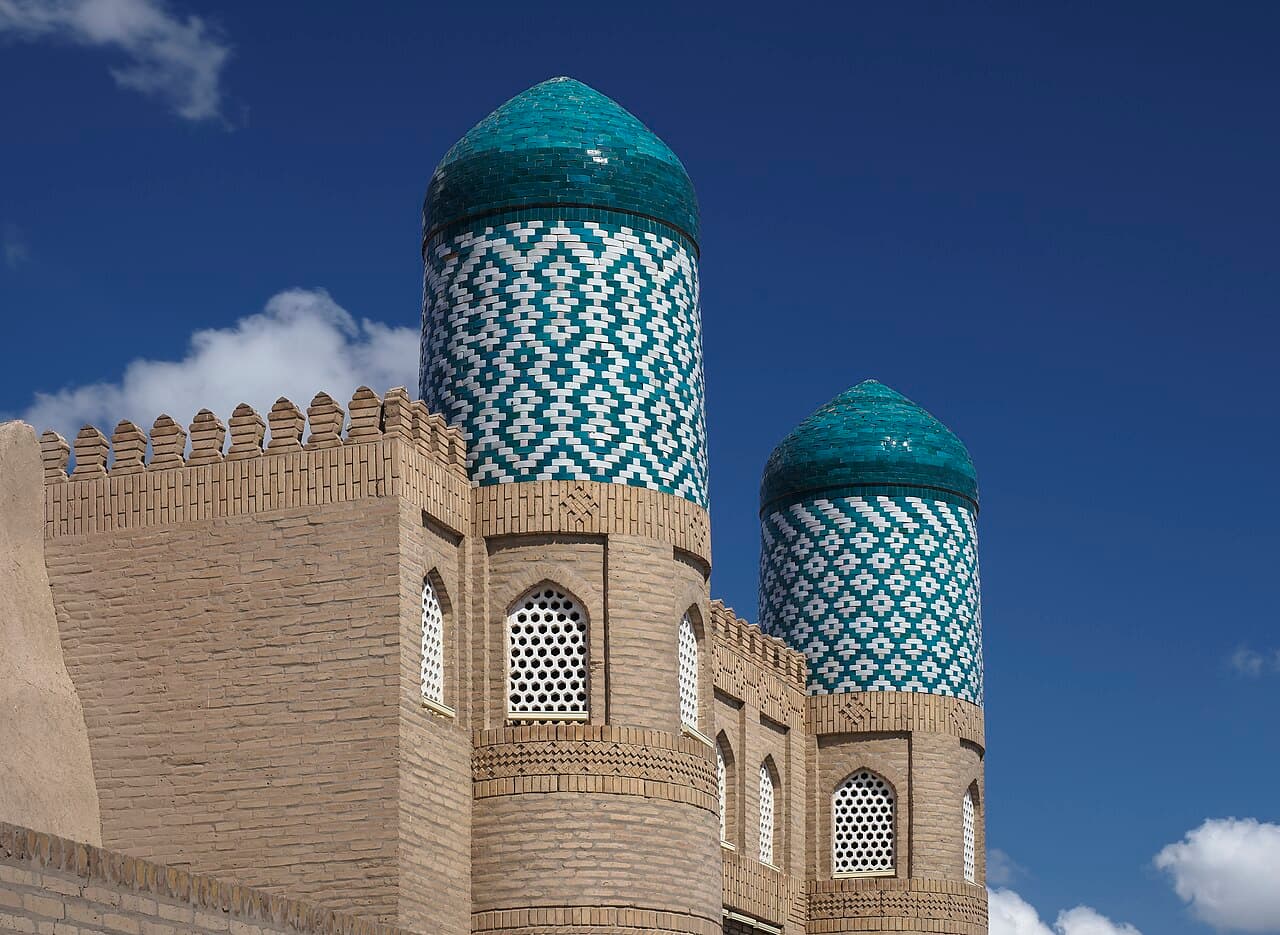
An early transfer takes you to the domestic terminal for the morning flight to Termez, 661 km south and about two hours by air. Your driver and guide meet you on arrival and you start straight away in one of the oldest cities in Central Asia. You visit the Kokildor-Ota khanaka, the fortress of Kirk-Kiz, a summer residence of the Samanid rulers, and the Sultan Saodat ensemble, a long avenue of mausoleums of the Termezi sayyids. The day ends at the mausoleum of Al-Hakim at-Termezi above the river. Overnight in Termez.
Day 3Termez – Kampyr-Tepe – Jarkurgan – Termez
After breakfast you drive north-west to Kampyr-Tepe, a Greco-Bactrian fortress on a bluff above the old course of the Amu Darya, about 35 km and an hour away. You continue to the eleventh-century Jarkurgan Minaret with its fluted brick shaft, then return towards Termez past views of the Surkhan oasis and the Friendship Bridge into Afghanistan. The afternoon is given to the Buddhist sites: the cave monastery of Kara-Tepa, the temple complex of Fayaz-Tepa and the eroded brick core of the Zurmala stupa, followed by the Archaeology Museum. Overnight in Termez.
Day 4Termez – Sherabad – Boysun
You leave the Amu Darya behind and drive north through Sherabad and the dry gorges below the Kohitang ridge, climbing steadily into the Hissar foothills until the road reaches Boysun, roughly 150 km and three hours from Termez. The town sits among walnut and apricot orchards with the mountains at its back. In the afternoon you walk through the bazaar and visit local craftswomen who still embroider the distinctive Boysun suzani and weave the striped chapan coats worn at village celebrations. Overnight in a family-run guesthouse.
Day 5Boysun and the Hissar foothills
A full day in the Boysun district, the living heritage that gives this trip its name. You drive out to the mineral spring at Omonxona, set in a wooded valley below the ridge, and walk a stretch of the Machay gorge where shepherds still bring their flocks up in spring. Your guide explains the Boysun bahori spring festival, the songs, the rope-walking and the doira drumming that UNESCO recognised. Lunch is with a village family, and there is time in the afternoon to sit with musicians before returning to your guesthouse. Overnight in Boysun.
Day 6Boysun – Shakhrisabz – Samarkand
You set off early and cross the mountains north through the Derbent gorge, the narrow defile the ancient sources call the Iron Gates, where the road out of Bactria was once controlled from a single toll post. Arriving in Shakhrisabz you visit the towering remains of Timur's Ak-Saray Palace, the Dor-us Saodat complex with the mausoleum of his son Jakhongir, and the Dor-ut Tilavat ensemble with the blue-domed Kok-Gumbaz Mosque. In the late afternoon you drive over the Takhtakaracha pass to Samarkand. Overnight in Samarkand.
Day 7Samarkand – Tashkent – departure
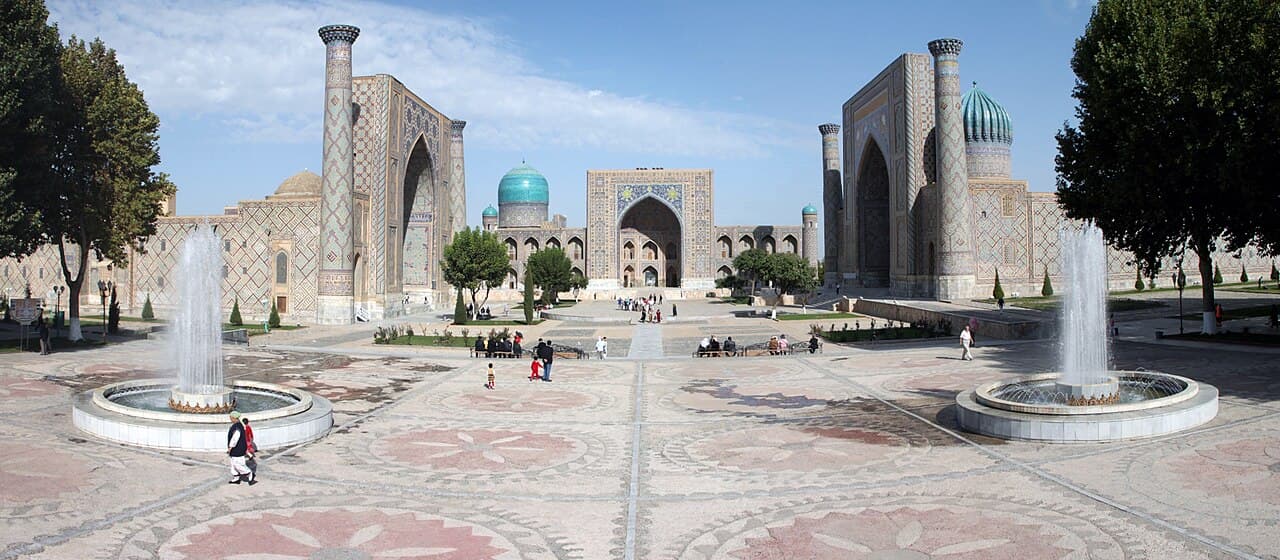
The last morning is spent in Samarkand. You stand in Registan Square between the Ulugbek, Sher-Dor and Tilya-Kori madrasahs, then walk to the ribbed turquoise dome of the Gur-Emir Mausoleum, where Timur is buried, and finish with time at Siab Bazaar for pomegranates and Samarkand flatbread. In the afternoon you board the Afrosiyob high-speed train to Tashkent, a journey of a little over two hours, and are transferred to the airport for your onward flight. End of your Surkhandarya journey.
Package details
Only inclusions explicitly present in the tour data are listed here.
Confirmed in the tour description
English-speaking local guide throughout
All internal transport and transfers
Hand-picked hotels with daily breakfast
Rest and wellness stay at the listed resort
Accommodation
The catalogue records the accommodation standard shown below. Exact hotel names and room categories are confirmed with your booking.
Group size
Up to 26
travellers
Included in this tour
Wellness & restorative stays
Time to slow down is built into this itinerary. The stays below are linked to this tour and form part of the travel programme.
Included in this tour
Shakhrisabz Heritage Spa Hotel
Shakhrisabz
Boutique heritage hotel with spa near Timur's birthplace. Hammam, traditional treatments, and views of historical monuments.

 Included in this tour