
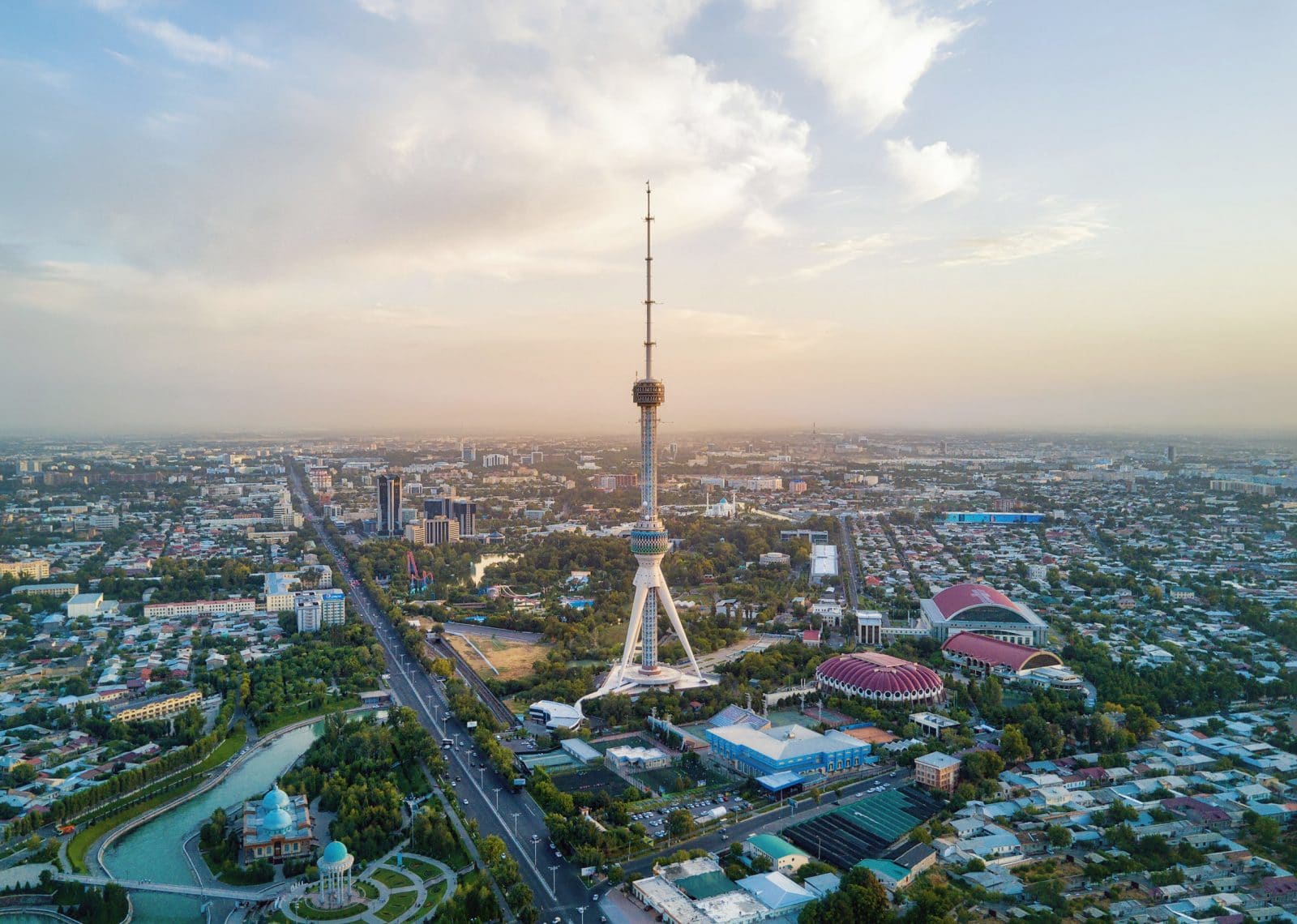
Tashkent
Uzbekistan's vibrant capital blends broad boulevards, living heritage, elegant metro stations, and a welcoming modern rhythm.
About the city
Tashkent, the capital of Uzbekistan, is a city where contemporary life and deep-rooted history meet in a way that feels both dynamic and welcoming. As the largest city in Central Asia, it serves as the main gateway to the country and gives many travelers their first impression of Uzbek culture, hospitality, and everyday life. The city feels spacious and green, with broad avenues, shaded parks, and lively public squares that make it comfortable to explore.
One of the most fascinating things about Tashkent is the contrast between its modern districts and its older neighborhoods. In one part of the city, visitors find business centers, stylish cafes, museums, and modern shopping streets. In another, they encounter traditional mahallas, historic mosques, domed markets, and quieter lanes that preserve the atmosphere of an earlier era. This balance gives Tashkent a special character that is different from the more monument-focused Silk Road cities.
Historically, Tashkent played an important role as a crossroads of trade, religion, and culture. It stood on major routes connecting East and West, and over the centuries it absorbed influences from Persian, Turkic, Islamic, Russian, and Soviet worlds. That layered past can still be seen in places such as the Khast Imam Complex, where one of the world's oldest Quran is preserved, as well as in the city's urban design and civic landmarks.
Tashkent is also known for its cultural significance. The city offers excellent museums, theaters, galleries, and music venues, making it an important center for contemporary Uzbek identity. The famous metro system is more than public transportation: many stations are designed like underground art halls, decorated with chandeliers, mosaics, marble, and symbolic motifs that reflect different periods and ideas. Exploring the metro is a memorable experience in its own right.
The food scene in Tashkent adds another dimension to the visit. Travelers can taste classic Uzbek dishes such as plov, lagman, shashlik, and samsa, but the capital also offers refined restaurants, casual teahouses, bakeries, and international cuisine. Markets such as Chorsu Bazaar make the city feel especially alive, with fresh produce, spices, bread, sweets, and local street food giving insight into daily life.
For many visitors, Tashkent is not only a starting point but a destination worth understanding on its own. It introduces the story of Uzbekistan through history, architecture, cuisine, and urban life, while providing the comfort and infrastructure of a modern capital. Spending time here helps travelers appreciate the wider journey across the Silk Road with much greater depth.
Best time to visit
Spring from April to June and autumn from September to October offer the mildest weather for city walks and sightseeing.
Travel tips
- Use the metro for quick and affordable travel across the city.
- Carry some cash when shopping in traditional markets.
- Set aside at least one full day to explore both the old and modern parts of Tashkent.
Top attractions
- Khast Imam Complex
- Chorsu Bazaar
- Amir Timur Square
- Tashkent Metro
Things to do
- Walk through the Old City to experience traditional neighborhoods and religious landmarks.
- Visit museums, galleries, and theaters to understand the country's artistic and historical identity.
- Taste plov, samsa, fresh bread, and local sweets in bazaars, teahouses, and modern restaurants.
- Ride the metro and stop at different stations to admire their architecture and design.